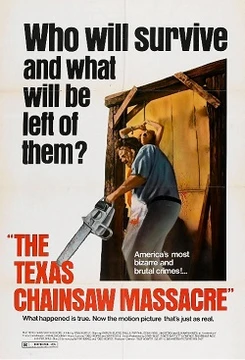
The 1973 Gas Station Incident
A family's dinner becomes a nightmare. But for them, it's just Tuesday.
The 1973 Gas Station Incident is the pivotal event that sets the Texas Chainsaw Massacre saga into motion. It refers to the harrowing encounter between a group of young friends and the cannibalistic Sawyer family at a remote gas station and slaughterhouse in rural Texas. This incident marks the first known confrontation between outsiders and the family, leading to the brutal deaths of most of the group and the emergence of Leatherface as a terrifying icon of horror.
- Role
- Catalyzing event of the franchise
- Affiliation
- Sawyer family
- First appears
- The Texas Chainsaw Massacre (1974)
- Status
- Concluded with the escape of Sally Hardesty
Lore & Background
The 1973 Gas Station Incident is rooted in the Sawyer family's isolated existence in the Texas backwoods. The family, led by the ancient, near-mummified Grandpa Sawyer, operates a failing slaughterhouse and a gas station run by the Hitchhiker, a twitchy, skin-cutter who baits travelers with a mix of charm and menace. The incident begins when a group of five friends—Sally Hardesty, her wheelchair-bound brother Franklin, and their companions Jerry, Kirk, and Pam—stop at the gas station after a graverobbing trip, unknowingly steering into the family's hunting grounds.
The family's method is methodical: incapacitate victims, hang them on meat hooks like sides of beef, and prepare them as the main course. Leatherface, the hulking, mask-wearing son who can't speak but can certainly swing, emerges with a chainsaw to dispatch the intruders one by one. The incident escalates into a night of pure sensory horror—screams swallowed by buzzing blades, the clatter of metal hooks, and the wet thud of a sledgehammer—culminating in a grotesque dinner scene where Sally is tormented by the cackling family before escaping. This event solidifies the Sawyers as a threat and establishes the rural horror of the franchise.
In Their Own Story
The heat of a Texas summer clings to the air like a fever as a van rolls down a dusty road. Inside, five friends laugh over a stolen grave, the bones clinking in the back, unaware that the gas station ahead is a trap baited with cheap gas and a madman's grin. The Hitchhiker's wild eyes and mutterings set the first alarm—he slashes Franklin's arm with a straight razor just for a photo—but they dismiss him as a local oddity. Hours later, Kirk and Pam explore a nearby house, the floorboards groaning under their feet, only for Leatherface to burst from a hidden door, his chainsaw roaring like a demon's cough. One by one, the friends fall: Kirk's skull caved by a sledgehammer, Pam shrieking on a meat hook, Franklin slashed in the brush, Jerry impaled in a freezer. Sally alone survives, dragged to a dinner table where the family cackles and slices meat, the old man sucking bone marrow. She escapes through a window, glass biting her skin, screaming into the dawn, but the chainsaw's snarl follows her into the fields, a promise that some nightmares don't end.
Reader's Guide
The incident begins with the group's arrival at the gas station, where the Hitchhiker's erratic behavior—slashing Franklin's arm, babbling about slaughterhouses—spooks them. They leave but later return to investigate a strange house, where Leatherface kills Kirk with a sledgehammer in a single, sickening blow. Pam is discovered and hung on a meat hook, her screams muffled by the buzzing flies, then placed in a freezer. Jerry is killed when he finds Pam's body and Leatherface's blade finds him. Franklin is attacked in the woods and dies from chainsaw wounds, his wheelchair overturned in the dirt. Sally is captured and subjected to a dinner ritual with the family, including Grandpa Sawyer, who fails to kill her with a hammer—his ancient hands too weak to strike true. She escapes after a prolonged chase through brush and barbed wire, flagging down a truck driver, while Leatherface swings his chainsaw in fury, a silhouette against the rising sun. The incident's impact is immediate: it introduces the Sawyer family's cannibalistic lifestyle and Leatherface's iconic weapon, setting the template for slasher horror. It also establishes the theme of rural decay and family dysfunction as sources of terror—a rotting house, a rotting family, and a dinner that never ends.
Did You Know?
- The gas station was a real location in Texas, but the interior scenes were filmed on a set built inside the actual building—the smell of rotten meat was real, not staged.
- Leatherface's chainsaw was a real, working tool, adding genuine danger to the filming; the actor had to keep it away from his face and the other actors' limbs.
- The dinner scene was improvised to capture genuine fear from the actress playing Sally—the family actors actually poked and prodded her, and her terror is real.
- The film was inspired by the real-life crimes of Ed Gein, though the Sawyer family is fictional—Gein dug up graves and made furniture from human skin, but never used a chainsaw.
More in Story & Timeline
Elsewhere in the The Texas Chainsaw Massacre universe
Spotted an error? Know more?
This is a living reference — every entry is fact-audited, and reader corrections feed straight into our audit queue. Suggest an edit · See this site's audit record