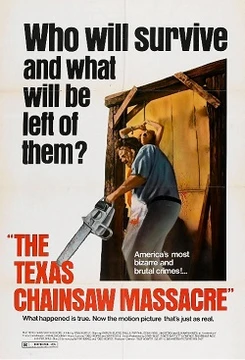
The Sawyer Family's Early Crimes
Before the chainsaw bit into flesh, the shovel bit into Texas clay.
The early crimes of the Sawyer family form the dark foundation of their descent into madness and murder in the Texas Chainsaw Massacre universe. Before the infamous events of 1973, the Sawyers were a rural Texas clan whose isolated farmstead became a staging ground for a series of gruesome acts, including grave robbing, kidnapping, and slaughter. These crimes, driven by poverty, a twisted family code, and a failing slaughterhouse business, set the stage for Leatherface's reign of terror and the family's cannibalistic survival.
- Role
- Origin of the family's criminal enterprise
- Affiliation
- Sawyer family (Hewitt family in some continuities)
- First appears
- Referenced in The Texas Chain Saw Massacre (1974) and expanded in sequels
- Status
- Precedes the main timeline
Lore & Background
The Sawyer family's early crimes are rooted in their struggle to survive during economic hardship in rural Texas. The family patriarch, often identified as a former slaughterhouse worker, taught his kin the trade of butchery, which they perverted into a means of disposing of victims. The farmhouse became a hub for stealing livestock and later, human remains from local graveyards, which they used to create furniture and meat products. This grave robbing, known as the 'bone trade,' was a key early crime that connected the Sawyers to the wider criminal underworld, though they remained isolated by choice and paranoia.
As the family grew more depraved, their crimes escalated from theft to murder. Hitchhikers, travelers, and anyone who stumbled onto their property were killed and processed in the family's slaughterhouse. The Sawyer children, including Leatherface (Bubba), were raised in this environment, learning to view violence as normal. The early crimes were not just about survival but also about maintaining a twisted family tradition, where the line between human and animal became blurred. These acts created a legacy of horror that would culminate in the 1973 massacre, but they also established the Sawyers as a cautionary tale of rural decay and familial insanity.
In Their Own Story
The moon hung low over the Sawyer farm, casting long shadows across the rusted windmill. Inside the slaughterhouse, the air was thick with the smell of blood and rot. Old Man Sawyer, his hands stained with years of work, gestured to the pile of bones in the corner. 'We'll sell 'em as fertilizer,' he grunted, his voice a dry rasp. His son, a hulking figure with a leather mask, nodded and dragged another body from the truck. The family worked in silence, their movements practiced and cold. Outside, a stolen car sat abandoned, its owner's fate sealed by a single blow from a sledgehammer. The Sawyers had learned that the law rarely ventured this far out, and the land kept their secrets well. As dawn broke, they sat down to a meal of meat and gravy, never speaking of the night's work. It was just another day on the farm—but the flies buzzing around the back porch hinted at the truth buried in the dirt.
Reader's Guide
The early crimes of the Sawyer family are a series of events that build toward the main story. They include:
- **Grave robbing**: The family digs up graves to steal bones and valuables, selling them to a local gas station owner who acts as a fence. This establishes their connection to the black market. - **Slaughterhouse operations**: The Sawyers use their knowledge of butchery to kill and process victims, treating humans like cattle. This is where Leatherface learns his trade. - **First murders**: The family kills travelers and drifters, often luring them with offers of help or food. These early victims are not reported, allowing the crimes to continue. - **Isolation and decay**: The family's crimes drive them further from society, with the farm becoming a fortress of madness. The early period ends when the family's activities attract attention, leading to the events of 1973.
Key figures include the patriarch, Leatherface, and the Hitchhiker, who all play roles in these early atrocities. The impact is a foundation of terror that defines the family's legacy.
Did You Know?
- The early grave robbing was inspired by real-life crimes committed by Ed Gein in Wisconsin, not by body snatching in Texas during the 1970s.
- The Sawyer family's use of human bones for furniture and decorations was a detail that shocked audiences in the original film.
- In some versions of the story, the family's early crimes were connected to a failing meat market, forcing them to find alternative sources of income.
- The character of the Hitchhiker was not originally conceived as a younger member of the family who participated in early killings; there is no canonical depiction of him in such a role.
More in Story & Timeline
Elsewhere in the The Texas Chainsaw Massacre universe
Spotted an error? Know more?
This is a living reference — every entry is fact-audited, and reader corrections feed straight into our audit queue. Suggest an edit · See this site's audit record