The House of Horrors
A home where the walls have teeth, the floorboards know your step, and the dinner bell tolls for you.
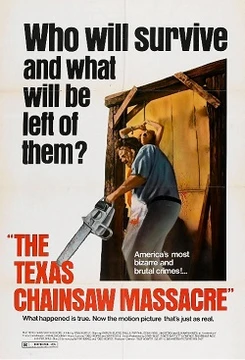
The House of Horrors is the decaying, isolated farmhouse that serves as the primary lair of the Sawyer family in The Texas Chainsaw Massacre. It is a central location in the franchise, embodying the family's grotesque domesticity and their practice of murder and cannibalism. The house is a character in its own right, its oppressive atmosphere and labyrinthine layout reflecting the twisted psyche of its inhabitants.
- Role
- Primary setting and family homestead
- Affiliation
- Sawyer family
- First appears
- The Texas Chainsaw Massacre (1974)
- Status
- Destroyed by fire in the original film's climax
Lore & Background
The House of Horrors is a two-story farmhouse located on a remote property in rural Texas, surrounded by fields and a dense thicket of trees. It is the residence of the Sawyer family, including the iconic Leatherface, who uses the upper floor as his workspace for crafting masks and preparing victims. The interior is a chaotic blend of domestic clutter and grisly trophies, with furniture made from human bones and skin, and a meat hook that hangs ominously in the kitchen. The house's basement is a dark, cramped space where victims are often kept before their fate is sealed.
The house's history is tied to the family's decline into madness and violence, with the property having been passed down through generations. It is a place where the line between home and slaughterhouse blurs, as the Sawyers maintain a twisted semblance of family life—eating meals together, arguing, and caring for their elderly grandfather—while engaging in acts of brutality. The house's isolation allows their horrors to go unnoticed by the outside world, making it a perfect hunting ground.
In the original film, the house is ultimately set ablaze by the sole survivor, Sally Hardesty, as she escapes. The fire consumes the structure, but the family's legacy endures in later installments, with the house sometimes rebuilt or replaced by similar settings. The House of Horrors remains an iconic symbol of the franchise's themes of decay, family dysfunction, and the terror of the familiar turned monstrous.
In Their Own Story
The sun had set hours ago, but inside the farmhouse, the only light came from a flickering kerosene lamp. The smell of old blood and rotting wood hung thick in the air. In the kitchen, a woman with a vacant stare stirred a pot of stew, her movements mechanical. Upstairs, a heavy man in a mask of stitched human skin hummed a tuneless song as he arranged a new face on a mannequin head. In the parlor, an old man in a dusty suit sat motionless in a rocking chair, his eyes fixed on nothing. The house groaned around them, its floorboards creaking with every step, as if it too was alive with the family's madness. A knock at the door—a lost traveler seeking help—broke the silence. The family exchanged glances, and a slow, hungry smile spread across the woman's face. The house had a new guest.
Reader's Guide
The House of Horrors is the iconic farmhouse from the original 1974 film, serving as the Sawyer family's home and slaughterhouse. It is a two-story wooden structure with a sagging porch, a staircase that groans like a dying animal, and a basement where victims are kept in the dark, listening to the family's footsteps overhead. The interior is a nightmare of domesticity: furniture upholstered in human skin, lampshades stitched from dried flesh, and a rocking chair where Grandpa sits, barely alive, waiting for his turn to swing the hammer. The kitchen hook still drips, the floorboards are sticky with old blood, and the walls seem to lean inward, as if the house itself is hungry.
Did You Know?
- The house used in the original film was a real abandoned farmhouse in Texas, which the production team renovated and later left to decay.
- The interior sets were built on a soundstage, with the bone furniture crafted from actual animal bones and latex.
- The house's iconic front porch and windmill were added specifically for the film to enhance its eerie appearance.
- In the 2003 remake, the house was rebuilt as a larger, more Gothic structure, but the original remains the most famous.
More in Lore & History
Elsewhere in the The Texas Chainsaw Massacre universe
Spotted an error? Know more?
This is a living reference — every entry is fact-audited, and reader corrections feed straight into our audit queue. Suggest an edit · See this site's audit record