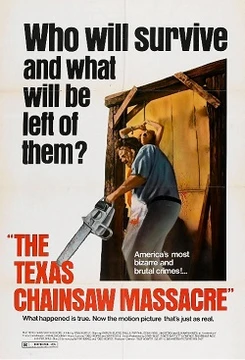
The Roadhouse
Last stop before the slaughter.
The Roadhouse is a dilapidated gas station and diner squatting on a desolate stretch of Texas highway like a rusted trap, a grim waypoint for travelers unaware of the horrors lurking nearby. It functions as a hub of eerie normalcy, where the mundane facade of rural commerce—a flickering 'Open' sign, a single pump—conceals a deep connection to the cannibalistic Sawyer family. For fans, it's an iconic setting that embodies the franchise's themes of isolation, decay, and the perversion of American roadside culture, a place where the promise of a cold drink curdles into a prelude to butchery.
- Role
- Gas station and diner
- Affiliation
- Sawyer family (operated by the Hitchhiker and others)
- First appears
- The Texas Chain Saw Massacre (1974)
- Status
- Abandoned or destroyed (depending on continuity)
Lore & Background
The Roadhouse is a crumbling relic of 1970s Americana, with a rusted gas pump out front that hasn't worked in years and a grimy interior cluttered with sun-bleached signs, a jukebox playing only static, and a counter where the Hitchhiker often lingers, picking at his own scabs. It serves as a front for the Sawyer family's operations, offering a place to lure victims or sell meat from their gruesome harvest—cuts of 'barbecue' that no customer questions. The diner's menu is sparse: greasy burgers, stale coffee, and a special of the day that's best left unknown. The atmosphere is thick with the smell of stale grease and decay, hinting at the violence that stains the surrounding land.
Beneath its ordinary appearance, the Roadhouse is a strategic outpost for the Sawyers, allowing them to monitor the highway for fresh prey. The Hitchhiker, with his manic demeanor and cryptic warnings, often uses the diner to unsettle customers before directing them toward the family's slaughterhouse—or simply following them home. The building's isolation and the family's control over the area make it a trap for anyone who stops, turning a simple rest stop into a threshold of terror.
The Roadhouse embodies the franchise's critique of rural poverty and the breakdown of community, where desperation has twisted hospitality into predation. Its peeling paint and flickering lights are a visual shorthand for the decay that permeates the Sawyer family's world, making it a memorable and unsettling landmark in horror cinema.
In Their Own Story
The dust-coated pickup rattled to a stop, and the driver squinted through the grimy windshield at the faded sign: 'Gas & Eats.' Inside, the air was heavy with the smell of old grease and something metallic—like blood-soaked iron. A gaunt man with wild eyes shuffled behind the counter, his fingers twitching as if counting invisible flies. 'Y'all need some gas?' he asked, his voice too high, too eager, cracking like dry wood. The traveler nodded, but the man's gaze lingered, tracing the outline of the car outside, then the traveler's throat. 'Be careful out there,' he whispered, almost to himself. 'The old place... it's hungry.' The traveler paid and left, never noticing the meat hook dangling just out of sight in the back room, its chain swaying from a phantom breeze.
Reader's Guide
The Roadhouse is a key location in the original 1974 film, serving as the first point of contact between the protagonists and the Sawyer family. It's a rundown gas station and diner where the Hitchhiker works, using his unsettling behavior to warn—or taunt—customers before they encounter the family's true horrors. The setting establishes the film's atmosphere of rural dread, contrasting the promise of roadside hospitality with the reality of cannibalistic predation.
In the story, the Roadhouse is where the Hitchhiker first appears, cutting himself and demanding payment for gas, foreshadowing the violence to come. It also provides a false sense of safety, as characters like Sally and Franklin stop there before venturing into the family's territory—a last chance to turn back that they tragically ignore.
Did You Know?
- The Roadhouse was filmed at a real abandoned gas station in rural Texas, which was modified with props like old signs and a meat hook to enhance its eerie atmosphere.
- In the original film, the Roadhouse's interior was designed to feel claustrophobic and grimy, with low lighting and clutter to unsettle viewers.
- The Hitchhiker's dialogue at the Roadhouse includes cryptic warnings about the 'old place' and the 'family,' hinting at the danger without revealing the full truth.
- The Roadhouse's exterior was reused in later franchise installments, though its condition varies to reflect different timelines or retcons.
More in World & Setting
Elsewhere in the The Texas Chainsaw Massacre universe
Spotted an error? Know more?
This is a living reference — every entry is fact-audited, and reader corrections feed straight into our audit queue. Suggest an edit · See this site's audit record