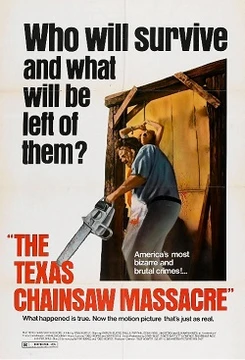
The Slaughterhouse
Where rusted hooks sway with the weight of the dead, and the chainsaw's snarl is the only prayer you'll hear.
The Sawyer family home is a decaying farmhouse located in the remote Texas countryside, serving as the primary workspace and killing ground for the Sawyer family. Originally a legitimate residence, it has long since fallen into disrepair and been repurposed for the family's gruesome activities. The site is central to the family's operation, where they process victims and maintain their cannibalistic lifestyle, often using it as a dumping ground for those who wander too close.
- Role
- Primary killing and processing site for the Sawyer family
- Affiliation
- Sawyer family
- First appears
- The Texas Chainsaw Massacre (1974)
- Status
- Occupied and dilapidated, still used by the family
Lore & Background
The Sawyer family home is a grim testament to their dark heritage, a relic of a once-thriving farm now twisted into a chamber of horrors. Its rusted machinery, blood-stained floors, and hanging hooks evoke the brutal efficiency of a working slaughterhouse, but the Sawyers have adapted it for human prey. The building's layout includes a main processing area where conveyor belts once carried cattle carcasses—now they drag the limp bodies of lost hitchhikers and nosy deputies. A freezer room stores the remains, stacked like cordwood, the frost clinging to eyelids and open wounds. The bone room is a cathedral of trophies: femurs arranged by length, skulls grinning from shelves, a chandelier of ribs dangling from the ceiling. The stench is a living thing—a cocktail of old blood, rot, and the metallic tang of fear-sweat.
The family's patriarch, Grandpa Sawyer, is largely immobile and barely conscious, kept in a chair and unable to actively oversee operations or sharpen tools. Leatherface, the hulking masked son, is the primary executioner, wielding his chainsaw to dispatch intruders and prepare the 'product.' He moves through the gloom like a predator, his apron stiff with dried gore, the saw's teeth gleaming in the dim light. The home is not just a workplace but a sacred space for the Sawyers, where they uphold their twisted traditions of survival and consumption. Here, the family gathers for meals that are both communion and mockery of normalcy.
Despite its horror, the Sawyer home is also a place of eerie stillness, where the only sounds are the drip of blood and the hum of old machinery. A single fly buzzes in a jar on a windowsill. A forgotten radio crackles with static, playing a country song from decades past. It serves as a symbol of the family's isolation from society, a fortress of madness hidden in the Texas backwoods. For those who stumble upon it, the Sawyer house is the last stop on a one-way trip into nightmare—a place where the meat hooks don't just hold sides of beef, but the last shreds of your hope.
In Their Own Story
The old pickup truck rattled to a stop in front of the Slaughterhouse, its headlights cutting through the thick Texas fog. The driver, a weary traveler named Ed, had been told this was a shortcut to the highway. He stepped out, the smell of rotting meat hitting him like a wall—a sour, sweet stench that coated his tongue. The building loomed, its corrugated metal walls stained with rust and something darker, something that had seeped into the grain over years. A flickering light inside cast shadows that danced like specters, and the wind moaned through a gap in the roof like a dying animal. Ed called out, his voice swallowed by the fog. Then, a low growl of an engine started somewhere within, and the sound of a chainsaw revving sent ice down his spine. It wasn't just a machine—it was a roar, hungry and personal. He turned to run, but the door behind him slammed shut with a bang that echoed through the hollow building. The last thing he saw was a hulking figure in a leather mask, raising a blade that caught the light like a silver scream.
Reader's Guide
The Slaughterhouse is the epicenter of the Sawyer family's operations, a place where the line between industry and atrocity blurs. It first appears in the original 1974 film as the final setting for the iconic climax, where Sally Hardesty confronts Leatherface in a frenzy of terror. The facility is not just a backdrop but an active character, its machinery and layout dictating the family's methods of murder and disposal. The main processing floor is a maze of conveyor belts, vats, and hooks—each station designed for a specific phase of butchery. The freezer room, with its thick metal door and frost-caked walls, is where the family stores their 'inventory,' the bodies stacked like sides of beef. The bone room, hidden behind a false wall, is Drayton's pride: a gallery of death where he arranges trophies with the precision of a museum curator.
In the story, the Slaughterhouse represents the culmination of the family's depravity—a place where victims are processed with the same cold efficiency as cattle. It's here that the Sawyers' cannibalistic lifestyle is laid bare, the dining table set with plates of human flesh. The building's layout creates a sense of inescapable dread: narrow corridors, sudden drop-offs into bone pits, and the ever-present hum of machinery that masks approaching footsteps. For fans, the Slaughterhouse is a pilgrimage site—a monument to the film's raw, unflinching horror. Its grimy, tactile reality grounds the nightmare in something all too real, making every creak of a hook and every drip of blood feel like it's happening just behind you.
Did You Know?
- The Sawyer house was inspired by the real-life crimes of Ed Gein, who used human remains in his home and work.
- The facility's bone room, filled with skeletal remains, was created using real animal bones and latex molds for the film.
- The chainsaw sound was created by mixing the engine of a chainsaw with the roar of a motorcycle for extra intensity.
- The building used for exterior shots was an actual occupied farmhouse, not an abandoned slaughterhouse.
More in World & Setting
Elsewhere in the The Texas Chainsaw Massacre universe
Spotted an error? Know more?
This is a living reference — every entry is fact-audited, and reader corrections feed straight into our audit queue. Suggest an edit · See this site's audit record