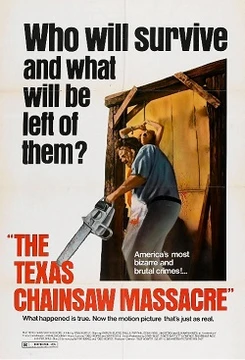
Texas Chainsaw Massacre: The Beginning – Comic (2006)
Before the mask, before the saw—there was only the family and the dark.

Texas Chainsaw Massacre: The Beginning – Comic (2006) is a comic-book adaptation of the 2006 prequel film of the same name, translating the origin story of the franchise's most iconic killer into sequential art. It follows the young Jedidiah Sawyer as the isolated Sawyer family's dark rituals and psychological deterioration slowly forge him into the masked, chainsaw-wielding figure known as Leatherface.
As a companion medium to the film, the comic gives readers a chance to experience the slow-burn horror of the Sawyer family's descent through the visual language of comics—panel pacing, ink-heavy shading, and the distinctive rural Texas backdrop that defines the franchise's aesthetic.
- Medium
- Comic book
- Based on
- Texas Chainsaw Massacre: The Beginning (2006 film)
- Year
- 2006
- Role in franchise
- Prequel / origin story of Leatherface
- Setting
- Rural Texas, 1973
- Tone
- Southern-gothic horror, psychological dread
Lore & Background
The story centers on Jedidiah Sawyer, a young man raised in the claustrophobic, superstitious world of the Sawyer family. Their decaying farmhouse, the oppressive Texas heat, and the family's twisted religious fervor create a pressure cooker of isolation. As outsiders—travelers, curious neighbors, and eventually a group of young people—cross their path, the family's already fragile sanity fractures further, and Jedidiah is drawn deeper into the role they expect of him: the enforcer, the protector, the monster they need to keep the world at bay.
What makes the origin resonate across the franchise is its quiet tragedy. Leatherface is never simply a villain; he is a product of neglect, manipulation, and a family that weaponized his vulnerability. The comic medium amplifies this by lingering on small, humanizing moments—a boy's confused smile, a hand reaching for comfort—before the ink bleeds into something grotesque and inescapable.
The Sawyer family's mythology, with its references to a twisted faith and the belief that the dead must be preserved, threads through every entry in the franchise. This origin story anchors those later, more chaotic massacres in a specific, aching human history, reminding readers that the chainsaw is not the source of the horror—the family is.
In Their Own Story
The porch light flickers, then dies. Outside, the cicadas scream in a wall of sound that swallows everything. Jedidiah stands at the kitchen window, his bare feet cold on the linoleum, watching the headlights of a stranger's car crawl down the dirt road toward the house. His mother's hand finds his shoulder—dry, papery, certain. "They come to take, baby. They always come to take." He doesn't answer. He never does. In the corner of the room, the saw rests against the wall like a sleeping dog, its teeth catching the last amber light. He picks it up. The weight is familiar. The weight is home. Outside, the engine cuts. Footsteps on gravel. He smiles, and the smile does not reach his eyes, and it will not, not anymore, not for a very long time.
Reader's Guide
Synopsis: A young man named Jedidiah Sawyer grows up under the suffocating influence of his isolated, fanatical family in rural Texas. As outsiders threaten their way of life, Jedidiah is gradually shaped into the family's violent protector, donning a mask and wielding a chainsaw to defend what the family considers sacred. The story is a slow psychological unraveling rather than a series of set-piece kills.
Timeline placement: Events are set in 1973, one year before the original 1974 film. It functions as a direct prequel, explaining how Leatherface came to be and why the Sawyer family operates the way it does. It sits before the 1974 original and before the 2003 reboot (Texas Chainsaw Massacre), which reimagines the family with a different origin.
Key beats: The family's isolation and superstition; the arrival of outsiders; Jedidiah's psychological break; the first use of the chainsaw; the solidification of the mask as identity.
Relations: It is a prequel to the 1974 original and a companion to the 2006 film. The 2003 reboot and 2022 sequel (Texas Chainsaw Massacre: The Beginning, 2019) offer alternate takes on the same origin concept with different characters and details.
Timeline note: The 1973 setting creates a one-year gap before the 1974 events. The 2019 remake shifts the origin to a different era and reassigns roles within the family, creating a soft contradiction with this entry's specific character dynamics.
Did You Know?
- The 2006 film that this comic adapts was directed by Jonathan Levine, who also directed (500) Days of Summer, making the Texas Chainsaw entry an unusual early credit in his filmography.
- The character of Leatherface in this origin is played by Bill Skarsgård in the 2006 film, giving the role a distinctly youthful, vulnerable quality before the mask fully takes over.
- The Sawyer family's backstory in this entry draws on the same rural-Texas gothic tradition as the 1974 original, but adds a layer of psychological family drama that later sequels would expand upon.
- The comic format allows for extended interior monologue and visual metaphor—such as the mask being depicted as a second face growing over Jedidiah's features—that the live-action film could only suggest.
More in Films & Timeline
Elsewhere in the The Texas Chainsaw Massacre universe
Spotted an error? Know more?
This is a living reference — every entry is fact-audited, and reader corrections feed straight into our audit queue. Suggest an edit · See this site's audit record