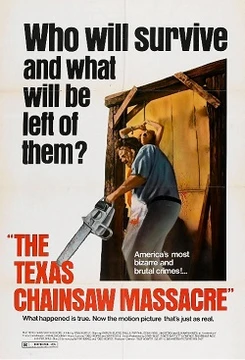
The Black Leatherface Cult
The family that slaughters together, stays together.
The Black Leatherface Cult is a fan-coined term for the deranged, quasi-religious devotion that the Sawyer family holds for Leatherface and his gruesome craft. While not an official organization, this cult-like reverence manifests in their rituals—like the greasy, blood-smeared dinner blessing—their cannibalistic feasts, and their worship of the slaughterhouse tools Leatherface wields. The cult's role is to explain the family's unwavering loyalty to their monstrous kin and their violent way of life, turning a backwoods horror into a twisted family tradition where the chainsaw's roar is a hymn and each fresh mask a sacrament.
- Character
- The Sawyer Family (as a collective)
- Role
- Cult-like family unit devoted to Leatherface and cannibalism
- Affiliation
- The Sawyer family (Hewitt family in some continuities)
- First appears
- The Texas Chain Saw Massacre (1974)
- Status
- Active in the franchise's timeline
Lore & Background
The Black Leatherface Cult is not a formal sect but rather the intense, almost spiritual bond that the Sawyer family shares, centered on Leatherface's role as their primary butcher and protector. In the original 1974 film, the family's dinner scene reveals a macabre ceremony where they thank their 'grandfather' for the kill and treat Leatherface's mask-wearing as a sacred duty. This reverence extends to their tools—the chainsaw is not just a weapon but an icon of their power, and Leatherface's masks are trophies that represent his kills, each one a 'face' for his otherwise childlike personality.
In Their Own Story
The old farmhouse kitchen was lit by a single, greasy bulb that swung on a frayed wire, casting jittery shadows across the walls. The family sat around the table, their faces smeared with the remains of their latest meal—a greasy sheen on chins, a smear of blood on a cheek. The eldest, a withered figure propped in a chair like a mummified scarecrow, mumbled a blessing over the bones, his voice a dry rattle. Leatherface stood at the head, his apron stained black with layers of old gore, his chainsaw resting on the floor like a sleeping beast that might wake at any moment. They didn't speak of gods or demons—they spoke of 'the old ways,' of the slaughterhouse that had closed, leaving them to carry on the work alone. To them, Leatherface was not just a son; he was their high priest of meat, and every scream was a prayer answered, every thud of the mallet a hymn.
Reader's Guide
The Black Leatherface Cult is the fan interpretation of the Sawyer family's dark rituals and hierarchy. Its core belief is that Leatherface is the family's chosen instrument of survival, wielding the chainsaw as a sacred tool. The cult's goals are simple: to feed the family, eliminate intruders, and preserve their isolated way of life. Members include the patriarch (often called Grandpa), the cook (Drayton), the hitchhiker (Nubbins), and Leatherface himself, each playing a role in the cult's bloody ceremonies. Their conflict is with anyone who stumbles onto their property—tourists, law enforcement, or the unlucky. The cult's role in the franchise is to show how terror can be normalized within a family, turning murder into a shared tradition passed down through generations.
Did You Know?
- The term 'Black Leatherface Cult' is a fan creation, not an official name from the films.
- The family's dinner ritual in the 1974 film mirrors a twisted version of a Christian grace, with Grandpa being 'blessed' with blood.
- Leatherface's different masks (the 'Old Lady,' 'Pretty Lady,' and 'Killing Mask') are seen by fans as ceremonial vestments for different roles.
- The cult's reverence for the chainsaw is so strong that Leatherface is often depicted treating it with care, almost like a religious relic.
More in Factions & Groups
Elsewhere in the The Texas Chainsaw Massacre universe
Spotted an error? Know more?
This is a living reference — every entry is fact-audited, and reader corrections feed straight into our audit queue. Suggest an edit · See this site's audit record