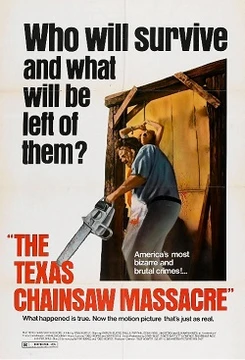
The 1973 Texas Massacre
One night of terror that never ended.
The 1973 Texas Massacre is the foundational event of The Texas Chainsaw Massacre universe—a single sweltering night in rural Texas when a group of young travelers, chasing a rumor of grave robbing, stumbled into the rotting maw of the Sawyer family's homestead. This massacre, centered on a slaughterhouse turned home and the family's cannibalistic trade, introduced the world to Leatherface, a hulking figure in a mask of stitched human skin who wields a screaming chainsaw like a butcher's final tool. It cemented the Sawyers' legacy of terror, serving as the dark origin point for all subsequent lore, and exploring themes of industrial decay, familial madness, and the collapse of rural American life under the weight of a dying economy.
- Role
- Catalyst event for the franchise
- Affiliation
- Sawyer family
- First appears
- The Texas Chainsaw Massacre (1974 film, depicting the event)
- Status
- Historical event within the canon; aftermath explored in sequels
Lore & Background
The 1973 Texas Massacre unfolded when five friends—Sally Hardesty, her wheelchair-bound brother Franklin, and their companions Jerry, Kirk, and Pam—traveled to a remote farmhouse after reports of grave robbing in the area. The farmhouse, owned by the Sawyer family, was a dilapidated structure that reeked of rot: bones littered the floors, furniture was upholstered in human skin, and a meat hook in the kitchen became a tool of torture. The family, including the patriarch Drayton (the cook, who ran a gas station as a front), the hulking Leatherface (who wore different masks for different tasks), the twitchy Hitchhiker, and the near-mummified Grandfather, had turned to cannibalism as a way of life. They used their skills as former slaughterhouse workers to process human victims, turning the farm into a grim assembly line of death.
In Their Own Story
The Texas sun beat down on the van as it rattled along the dusty road. Sally wiped sweat from her brow, her brother Franklin grumbling in the back about the heat. They passed the old slaughterhouse, its rusted machinery silent for years—a graveyard of iron and grease. None of them noticed the figure watching from a grimy window of the farmhouse ahead: a man in a mask of human skin, his eyes hollow, his hands gripping a chainsaw that smelled of old blood. By nightfall, the van would be abandoned, its doors hanging open, and the screams would echo through the fields, swallowed by the roar of that chainsaw, a sound that never really died.
Reader's Guide
The 1973 Texas Massacre is the cornerstone of the franchise, depicting the first known encounter between outsiders and the Sawyer family. The event is characterized by the family's use of a slaughterhouse as both home and hunting ground, with Leatherface as the primary enforcer—a silent giant who chases his prey with a chainsaw that seems to have a life of its own. The massacre highlights the family's twisted dynamics: Drayton's role as the manipulative cook, who serves human flesh to unsuspecting customers; the Hitchhiker's erratic, gleeful violence and obsession with photography; and Grandfather's symbolic power as the former best killer at the slaughterhouse, now a withered figure who must be fed blood to be roused. Sally Hardesty's escape—jumping through a second-story window, shattering glass, and fleeing into the dark fields, her leg bleeding, her mind broken—is a rare moment of survival, though she is left permanently traumatized. The event's legacy looms over later stories, with the Sawyer family's influence spreading through Texas and beyond, often tied to the decline of the meatpacking industry and the isolation of rural communities. The massacre is not just a single night but a symbol of the horror that can arise from desperation and decay—a warning that when the world forgets you, you might just start eating it.
Did You Know?
- The massacre was inspired by the real-life crimes of Ed Gein, who used human skin and bones to create household items.
- Leatherface's name comes from the mask he wears, made from the skin of his victims, a detail that became iconic in horror.
- The Sawyer family's home was originally a real farmhouse in Texas, used as the primary filming location.
- The chainsaw sound was created by recording a real chainsaw and mixing it with a motorcycle engine for added intensity.
More in Lore & History
Elsewhere in the The Texas Chainsaw Massacre universe
Spotted an error? Know more?
This is a living reference — every entry is fact-audited, and reader corrections feed straight into our audit queue. Suggest an edit · See this site's audit record