Rural Isolation
The road ends, the phone line doesn't reach, and no one is coming.

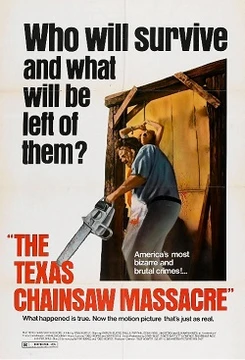
Rural isolation is the atmospheric and narrative spine of The Texas Chain Saw Massacre franchise. From Tobe Hooper's 1974 original through the 2003 remake, the 2022 reimagining, and the various sequels and prequels, the story consistently places its characters in the deep, roadless backcountry of Texas, where the nearest town is a memory and the nearest help is a myth. The Sawyer family's decaying farmhouse sits at the end of a dirt track that simply stops, making the setting itself a character: a place where modernity's promises of rescue, law, and community have not reached.
This isolation operates on two levels. Physically, victims are stranded with no signal, no passing cars, no way to call for aid. Socially, the family has severed itself from the outside world, existing in a kind of feral stasis where the rules of civilization no longer apply. The theme transforms a simple horror premise—people being killed in a remote location—into a meditation on what happens to a community when it is entirely cut off from the structures that keep it in check.
- Theme category
- Atmospheric / narrative device
- First appears
- The Texas Chain Saw Massacre (1974)
- Primary setting
- Rural Texas; a dilapidated farmhouse at the end of an unmarked dirt road
- Narrative function
- Creates victim helplessness and emphasizes social alienation of the killer family
- Recurs across
- Multiple franchise entries from 1974 through the 2020s
- Origin director
- Tobe Hooper
Lore & Background
In the franchise's core mythology, the Sawyer family occupies a farmhouse that has become a kind of antithesis to the town. Where the outside world moves forward—paving roads, building subdivisions, installing telephones—the family's domain has regressed into a tangle of rotting wood, animal bones, and the low hum of a chainsaw idling in the yard. The isolation is not merely geographic; it is a choice, a slow withdrawal that has calcified into identity. The family does not leave. They do not trade. They do not acknowledge the outside world except to consume what it sends them.
For the victims, this isolation is the true horror before the first blade or the first saw-tooth. The 1974 original establishes the pattern: a group of friends driving through the Texas countryside, a wrong turn, a stretch of road with no landmarks, a farmhouse that appears where nothing should be. The realization that they are far from any town, that their car is broken, that the nearest person they can see is the one wearing a mask of flayed skin—that is the moment the film's dread locks in. The audience understands that in this place, the social contract has been suspended.
Later entries in the franchise, including the 2003 remake and the 2022 film, retain this foundational geography while updating the texture. The 2003 version sharpens the contrast between the victims' urban expectations and the reality of the backcountry. The 2022 entry deepens the psychological weight of the family's self-imposed exile, suggesting that the isolation is as much a wound as a weapon. Across all of these, the dirt road that dead-ends, the farmhouse that swallows the light, and the silence that no siren can break remain the franchise's most enduring visual and emotional vocabulary.
In Their Own Story
The last stretch of gravel ended at a fence post with no gate, no sign, no name. Sally's phone had lost its last bar of signal forty minutes ago, and the afternoon light was turning the wheat stubble the color of old rust. She could see the farmhouse through the trees—two stories, one window cracked, the porch sagging like a broken jaw. Behind it, a faint vibration in the air. Not wind. Something mechanical, patient, waiting.
She pressed her thumb against the dead screen of her phone and whispered a number she had memorized from a gas-station map. No one would call it. No one would know where to send a truck. The road they had come in on was already a memory, a smear of red dirt and tire tracks in the heat haze. She looked back the way they had come. Nothing. Just the flat, empty plain stretching to a horizon that offered no help, no town lights, no promise.
The vibration in the air grew louder. The porch sagged a little more. And somewhere behind the rotting wall, a door that had not opened in years began, very slowly, to swing.
Reader's Guide
Rural isolation in The Texas Chain Saw Massacre is not merely a backdrop; it is the thesis statement of the franchise's horror. Tobe Hooper's 1974 original leverages the late-1960s and early-1970s cultural anxiety about the gap between urban modernity and the perceived savagery of the American backcountry. The victims are not just physically stranded; they are culturally unmoored, stripped of the assumptions that police will come, that a neighbor will hear, that the road will lead somewhere. This resonated powerfully with audiences still processing the social upheavals of the era, where the promise of progress felt increasingly hollow.
The 1986 sequel and the 2006 prequel both lean into the same geography but shift the emphasis. The sequel extends the family's isolation into a kind of generational curse, while the prequel reframes the farmhouse as a site of origin rather than endpoint. The 2003 Nispel remake, arriving in the post-9/11 era of heightened distrust in institutions, sharpens the theme: the victims' phones are dead, their cars are broken, and the system that is supposed to protect them simply does not extend to this stretch of dirt road. Isolation becomes a commentary on institutional failure.
The 2022 Bruckner entry pushes the theme further into psychological territory, suggesting the family's seclusion is less a choice than a trauma response, a refusal to re-enter a world that has already failed them. Across every era, the dead-end road, the rotting porch, and the silence that swallows a scream remain the franchise's most potent visual grammar. What changes is what the audience projects onto that silence: in 1974, it was the fear of the Other; in 2003, the fear of the system; in 2022, the fear of a wound that will not close.
Did You Know?
- The 1974 original was produced on an extremely low budget, and the choice of a remote rural Texas location was as much a practical constraint as a creative one, which in turn shaped the film's signature atmosphere of ine
- The franchise's core setting—the dilapidated farmhouse at the end of a dead-end dirt road—has remained a consistent visual anchor across entries spanning nearly five decades, making it one of the most recognizable horror
- The 2003 remake deliberately heightened the theme of technological isolation, having the victims' phones and vehicles fail in the remote setting, reflecting early-2000s anxieties about the limits of modern connectivity.
- The rural isolation motif in the franchise has been widely discussed by film scholars as an expression of the 'backwoods' trope, where geographic remoteness serves as a metaphor for social and moral exclusion from mainst
More in Themes & Franchise History
Elsewhere in the The Texas Chainsaw Massacre universe
Spotted an error? Know more?
This is a living reference — every entry is fact-audited, and reader corrections feed straight into our audit queue. Suggest an edit · See this site's audit record