The Franklin Hardesty Tragedy
A brother's helpless fate seals the family's doom—and the audience's dread.
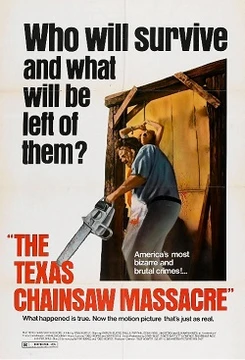
The Franklin Hardesty Tragedy is the brutal, defining murder of Sally Hardesty's wheelchair-bound brother in the original 1974 film. As the most vulnerable member of the group of friends who stumble onto the Sawyer family's cannibalistic homestead, Franklin's death is not just a killing—it's a harrowing turning point that shatters any illusion of safety. His desperate calls for Sally, answered only by the roar of a chainsaw, cement the film's reputation for unflinching horror and the complete helplessness of its victims.
- character
- Franklin Hardesty
- role
- Victim
- affiliation
- Sally Hardesty's brother, part of the group of friends
- first_appears
- The Texas Chain Saw Massacre (1974)
- status
- Deceased
Lore & Background
Franklin Hardesty is a sharp-tongued, bitter young man confined to a wheelchair, traveling through rural Texas with his sister Sally and their friends Pam, Jerry, and Kirk. His disability leaves him physically dependent, often left behind as the others explore the decaying farmhouse. Despite his biting remarks and simmering resentment, Franklin is deeply protective of Sally—though his limitations create a constant, brittle tension within the group. When the friends encounter the Sawyer family, Franklin's inability to flee or fight becomes a tragic liability. His murder by Leatherface is a shocking, visceral moment that underscores the family's utter lack of mercy.
The tragedy is amplified by Franklin's earlier warnings and suspicions about the farmhouse and its inhabitants. He senses the rot beneath the surface but is powerless to act. His death comes in a moment of desperate flight through the dark woods: his frantic calls for Sally are met with the chainsaw's roar, and the actual violence is left to the imagination. Yet its impact is indelible. This event not only propels Sally into her nightmarish ordeal but also serves as a stark reminder that in the world of The Texas Chain Saw Massacre, no one is safe—and the most innocent are often the first to fall.
In Their Own Story
The night air was thick with the smell of rot and old blood. Franklin's wheels ground against the dry earth as he struggled to keep up, his voice a mix of complaint and fear. 'Sally, wait up!' he called, but his sister was already lost to the shadows. Then came the sound—a sputtering roar that grew from a distant hum to a deafening scream. Franklin's hands gripped the chair's armrests, his eyes wide as the chainsaw's teeth caught the moonlight. He shouted her name one last time, a desperate plea swallowed by the machine's fury. The last thing he saw was the blur of a leather mask before the world went dark.
Reader's Guide
The Franklin Hardesty Tragedy is a cornerstone of the original film's narrative, representing the point of no return for the group. Franklin, as a character, embodies vulnerability and the failure of modern society to protect its weakest members. His wheelchair is not just a physical limitation but a symbolic anchor, dragging him into the path of the Sawyers' primal violence.
In the broader lore, Franklin's death is often cited as one of the most disturbing in horror cinema because of its raw, unglamorous brutality. Unlike many slasher victims, he is not a teen making poor choices but a person trapped by circumstance. The scene's power lies in its simplicity: a helpless man, a chainsaw, and the complete absence of hope.
Franklin's tragedy also deepens Sally's character, as her brother's murder fuels her desperate fight for survival. It's a reminder that in this universe, family bonds are both a source of strength and a target for destruction. The Hardesty name would later echo in sequels, but Franklin's fate remains a stark, unforgettable lesson in the cost of curiosity.
Did You Know?
- Franklin's wheelchair was specifically chosen to heighten his vulnerability, and actor Paul A. Partain, who was not disabled, performed in it for the entire shoot.
- The scene of Franklin's death was shot in a single take, with the camera focusing on his terrified face and the approaching chainsaw, leaving the actual violence to the audience's imagination.
- Franklin's character was originally written to be more abrasive, but director Tobe Hooper softened his dialogue to make his death more tragic.
- The wheelchair used in the film was borrowed from a local hospital and had to be returned after production, nearly causing a continuity issue for reshoots.
More in Lore & History
Elsewhere in the The Texas Chainsaw Massacre universe
Spotted an error? Know more?
This is a living reference — every entry is fact-audited, and reader corrections feed straight into our audit queue. Suggest an edit · See this site's audit record