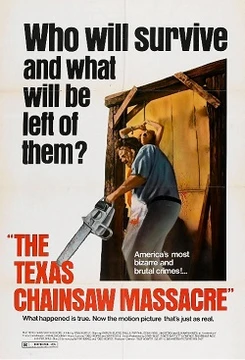
The Origin of the Human Skin Mask
The face of terror, stitched from human flesh.
The human skin mask is the most iconic and disturbing symbol of the Sawyer family's depravity. Crafted from the tanned flesh of their victims, it serves as a gruesome trophy and a practical disguise for Leatherface, the family's primary butcher. The mask is not a single object but a series of replacements, each reflecting a different kill and the family's twisted artistry. Its origin is rooted in the family's isolation, their reliance on a failing slaughterhouse, and a generations-old tradition of using every part of their prey, human or otherwise.
- Role
- Iconic disguise and trophy for Leatherface
- Affiliation
- The Sawyer family
- First appears
- The Texas Chain Saw Massacre (1974)
- Status
- Multiple iterations, all destroyed or lost over time
Lore & Background
The origin of the human skin mask is inseparable from the Sawyer family's history. After the local slaughterhouse closed, the family turned to murder to sustain their cannibalistic lifestyle. The mask-making process is a grim extension of their butchering skills: the skin is carefully removed from the victim's face, then treated with salt and lime to preserve it, much like they would cure animal hides. The mask is not merely a disguise; it is a ritual object, a way for Leatherface to assume a new identity and for the family to display their dominance over the living. Note that in the original 1974 film, the mask was a custom-made prosthetic sculpted from foam latex and painted to look like human flesh, not constructed from real animal skin or other materials.
In Their Own Story
The summer heat was thick with the smell of old blood and rust. In the back room of the gas station, the old man worked with a needle and sinew. Before him lay the fresh face of a hitchhiker, still warm. He had learned the technique from his father, who learned it from his. Each stitch was a memory, a way to keep the dead close. When he finished, he held it up to the dim light. It was a good mask, smooth and tight. He would give it to his boy, the big one. It would make him smile, in his own way.
Reader's Guide
The human skin mask is more than a costume; it is a key to understanding the Sawyer family's worldview. The mask originates from the family's need to both conceal and celebrate their murders. Leatherface, who is mentally childlike and sensitive, uses the masks to adopt different personas—sometimes a more aggressive 'face,' sometimes a curious one. The mask also serves a practical purpose: it hides his disfigurement and allows him to move among victims without immediate terror, though the ruse never lasts long.
The process of creating a mask is a family affair, passed down through generations. The skin is flayed with precision, then stretched and cured. The family treats the mask as a work of art, a testament to their skill. The mask is also a source of power; wearing it, Leatherface becomes the family's enforcer, their monster. Without it, he is just a frightened man in a big body.
The mask's most famous iteration is the 'Pretty Woman' mask from the 1974 film, made from the skin of Sally Hardesty's friend, Pam. This mask is notable for its feminine features and the grotesque irony of Leatherface using it to preen in a mirror. The mask is a constant reminder that in the Sawyer world, beauty and horror are the same thing.
Did You Know?
- The mask in the original 1974 film was a custom-made prosthetic sculpted from foam latex and painted to look like human flesh, not made from real animal skin or other materials.
- Leatherface swaps masks like a toddler changing costumes, each one a different kill's face: a 'killing mask' for the hunt, a 'dinner mask' for the table, and the infamous 'Pretty Woman' mask for his tender, terrifying mo
- Contrary to some claims, the 2003 remake does not show the mask-making process in the specific detail of soaking in saltwater brine, stretching over a wooden form, and curing in Texas heat; the remake depicts a different
- The 'Pretty Woman' mask is not named because of lipstick and eyelashes applied in the original film; that name originated from fan terminology and later media. In the original 1974 film, the mask did not have applied lip
More in Lore & History
Elsewhere in the The Texas Chainsaw Massacre universe
Spotted an error? Know more?
This is a living reference — every entry is fact-audited, and reader corrections feed straight into our audit queue. Suggest an edit · See this site's audit record