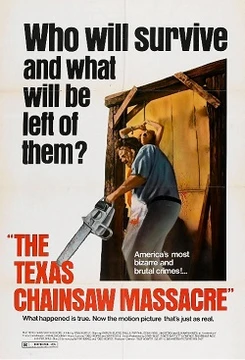
Survival
You don't beat the family. You just try not to be next.

Survival is the beating, blood-stained heart of The Texas Chainsaw Massacre franchise. Across every iteration—from Tobe Hooper's 1974 original through the 2003 remake, the 2022 reboot, and beyond—the central question is never *whether* the family will hunt, but *who* will make it out the other side. Survival here is not a clean victory; it is a scar, a gas-station phone call, a lifetime of flinching at the sound of a chainsaw starting up.
As a thematic pillar, survival in this universe is deliberately ugly and incomplete. Characters don't triumph; they endure. They run through cornfields, hide in barns, and lose friends one by one while the family's relentless, almost bureaucratic patience closes in. The audience is asked to sit in the dread of not knowing if the next cut will take the last living person off-screen.
- Theme
- Survival / Endurance under relentless pursuit
- Setting
- Rural Texas, isolated homesteads and backroads
- First prominent use
- The Texas Chain Saw Massacre (1974)
- Recurring antagonist force
- The Sawyer family (Leatherface and kin)
- Tone
- Dread, isolation, desperate physicality
- Franchise span
- 1974 through 2023 and beyond
- Signature survival mechanic
- Flight through rural terrain while the family methodically closes the distance
Lore & Background
In the world of the Sawyer family, survival is not a strategy; it is a privilege granted by geography and luck. The family's homestead sits at the terminus of a road that simply stops, and the surrounding farmland offers no witnesses, no cell reception, no quick escape. Every film in the franchise leans into this spatial trap: the survivors are always further from help than they realize, and the family is always closer than they fear. The 1974 original codified this by sending its young protagonists deep into the Texas hinterland, where the only structures are the family's rotting house, the barn, and the distant promise of a town that may or may not exist.
What makes survival in this universe so viscerally unsettling is the family's lack of theatrical malice. They do not monologue. They do not taunt. They cook, they clean, they wait. Leatherface does not chase with screaming rage; he chases with the steady, almost domestic patience of someone finishing a chore. This makes the act of survival feel less like an action sequence and more like a slow leak of hope. The survivor's victory is not a punch or a gunshot—it is the sound of a car engine, the sight of a gas-station sign, the relief of a stranger's face. Everything else is just time passing while you are still alive.
Later entries expanded the survival lexicon. The 2022 reboot framed survival as a collective, group-bonding ordeal, with characters making moral choices about who to protect and who to leave behind. The 2023 sequel pushed the theme further by asking whether survival is even the right goal when the trauma of the hunt rewrites a person's identity. In every telling, the franchise insists that getting out alive is the minimum, not the maximum, and that the chainsaw's echo follows you home.
In Their Own Story
The corn was waist-high and the sun was going down, painting the stalks the color of old blood. She could hear the saw—low, grinding, patient—somewhere behind the tree line. Not close. Not yet. But the family never came close all at once. They came in pieces: a shadow in the barn, a chair dragged across the porch, the smell of meat hitting the air. She ran. Her shoes tore on the gravel road. Behind her, the house stood still and dark, windows like empty sockets, and she knew with a bone-deep certainty that if she stopped, even for a breath, the door would open and he would be there, mask and all, tilting his head like a dog listening to a distant sound. She did not stop. She did not look back. She ran until the road ended at a gas station and a man in a flannel shirt looked up from his coffee and asked, in a flat Texas drawl, if she was all right. She opened her mouth. Nothing came out. The chainsaw had stopped. It always stopped. That was the worst part.
Reader's Guide
The 1974 original framed survival as a brutal, almost anti-heroic ordeal. Tobe Hooper's characters don't fight back with skill; they scramble, they hide, they lose each other. The final shot—Sally, the lone survivor, being found at a gas station—reframes survival not as triumph but as a kind of amputation. You made it out, but a piece of you is still in that barn. This resonated powerfully with 1970s audiences still processing the social fractures of the era: the feeling that institutions would not save you, that the danger was domestic, that the road out was longer than anyone admitted.
The 2003 remake sharpened the survival calculus, giving its cast more agency and a more structured chase, yet it preserved the core idea that the family's patience is the true weapon. The 2022 reboot, directed by David Bruckner, recontextualized survival as a group narrative—characters must decide who to save, who to sacrifice, and whether the person they're protecting is worth the cost. The 2023 sequel, helmed by Jim Mickle, pushed the theme into psychological territory, asking whether a survivor can ever truly leave the hunt behind.
What unites every entry is the refusal to let survival feel clean. The franchise's cultural power lies in making the audience feel the weight of the question: *would you still be running?* That discomfort, that lingering dread after the credits roll, is the theme's truest signature.
Did You Know?
- The 1974 original was produced on a notoriously low budget, which forced the filmmakers to rely on practical effects, tight framing, and the audience's imagination to sell the horror—making the survival tension feel more
- In the 1974 film, the sole survivor is found not in a dramatic confrontation but at a mundane gas station, a deliberate choice that underscores how survival in this world is less about heroism and more about simply being
- The Sawyer family's homestead is consistently depicted as sitting at the dead end of a rural road, a spatial design choice that turns the setting itself into a survival obstacle: there is no 'next town,' no easy exit, on
- The franchise's survival theme has been reinterpreted across four decades, shifting from the 1970s' solitary endurance to the 2020s' group-moral-dilemma structure, reflecting how audiences' relationship with horror and c
More in Themes & Franchise History
Elsewhere in the The Texas Chainsaw Massacre universe
Spotted an error? Know more?
This is a living reference — every entry is fact-audited, and reader corrections feed straight into our audit queue. Suggest an edit · See this site's audit record